Posted by Clark Kent Without Glasses in Uncategorized | 0 Comments
My top 10 fantasy book series
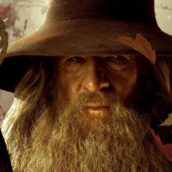
Of course you know The Lord of the Rings (and by extension The Hobbit and The Silmarillion) is going to occupy the #1 spot on my list. How could it be any other way? But there are nine other things on there, so let’s see what they are.
Before I start my list, though, I want to draw attention to some honourable mentions. These are series where I may have only read one or two books, but I really enjoyed those. I feel like I can’t put them in my list if my experience with them is so incomplete, but they need to be mentioned nonetheless. Some of them would likely be in the top 10 if I had read more of them. In no particular order, the honourable mentions go to:
- Die Zwerge (The Dwarves) by Markus Heitz (wonderful German atmosphere, fun characters, rather simplistic tone but I didn’t mind that)
- Devil’s Night Dawning by Damien Black (incredible writing and world-building, but the plot moved very slowly and the lore infodumps went way overboard)
- The Dragonbone Chair by Tad Williams (very atmospheric, beautiful writing, nice characters, a bit slow and lacking in truly fantastical elements)
- The Keeper Chronicles by J.A. Andrews (very charming, warm atmosphere, lovely characters, can get a bit too “girly” for me sometimes)
- Callis & Toll by Nick Horth (I’ve read everything he wrote for this series, but I know it continues with a different author and I feel like it’s only just starting out — in any case: awesome protagonists, great setting, no real complaints)
- Mistborn by Brandon Sanderson (I enjoyed the first book but I didn’t feel like it needed to continue beyond that point so I never read the others).
And then there are the series where I liked the first few books, but then gave up as the series went downhill for me:
- Dune by Frank Herbert (I loved the first book, intensely hated the next two, and then gave up. By contrast, I enjoyed the much-maligned prequel The Butlerian Jihad by Herbert’s son Brian and Star Wars author Kevin J. Anderson a lot more, precisely because it was a pulpy space opera adventure instead of the incomprehensible weirdness of the later Dune books)
- The Stormlight Archive by Brandon Sanderson (loved the first two books, didn’t like book 3)
- The Wheel of Time by Robert Jordan and Brandon Sanderson (loved the first three books, got a bit tired of it all by book 4. I would have continued if I didn’t know there were TEN more to go!)
- The Licanius Trilogy by James Islington (I really loved the first book, but I got tired of the convoluted plot in the second one. One day I might try again).
Okay, with that out of the way, let’s start the countdown!

10. The Banished Lands series by John Gwynne
John Gwynne has written two series in a world he named the Banished Lands. The first one, The Faithful and the Fallen, explores the familiar farmboy-to-chosen-one narrative and deals with prophecies, magic items and battles. There are several things I really like about this series. One is Gwynne’s attention to detail when it comes to the historical aspects of the setting. While the Banished Lands are located in a fictional world, they are closely modelled after the British isles in the mysterious period after the fall of the Roman Empire. While there are no Romans or Vikings or anything adjacent to them in this world, the setting still evokes the very early middle ages. After reading Jordan, Sanderson and Islington, it was very refreshing to finally visit a fantasy land with at least one non-human race in it: the giants. I loved the way Gwynne depicted the giants’ culture, the way they think, and the way they interact with humans. I also had a great deal of fun with the animal companions in these books, especially the talking ravens and crows.
The series could have been much further up my list if it weren’t for a number of issues that really bothered me. I don’t want to spoil anything, so I’ll be as vague as I can. What held The Faithful and the Fallen back was its very tenuous grasp on the spiritual. For a series that dealt with angels and demons, it felt like a very modern, secular approach to these topics, and that killed the authenticity for me. I also hated how the third book tried to subvert the very tropes on which the first two were built. Book 4 made up for that to some extent.
Most fans seem to regard the follow-up trilogy Of Blood and Bone as the lesser of the two series. I, on the other hand, think it’s superior. Of Blood and Bone takes place about a century after The Faithful and the Fallen. The human heroes of that series have now passed into legend, but the giants, who have much longer lifespans, are still around to remember them. Of Blood and Bone is really enhanced by the existence of the original series as a lore background, making the world feel more alive and real. I feel it also has a tighter plot structure, which is helped by the fact that it’s a trilogy (in my view, still the best format for epic storytelling, as opposed to longer series). Finally, I have to say that Gwynne is the absolute master of writing epic battle scenes that are incredibly vivid and immersive. When it comes to blood-pumping action sequences, this trilogy is nothing short of astounding. When it comes to the angel and demon stuff, though, the second trilogy doubles down on making the spiritual realm as mundane and boring as can be. The demons are just bad guys with bat wings and the angels are just… annoying, stuck-up, morally grey guys with white wings. This is the part where I have to sigh and wonder about what could have been.
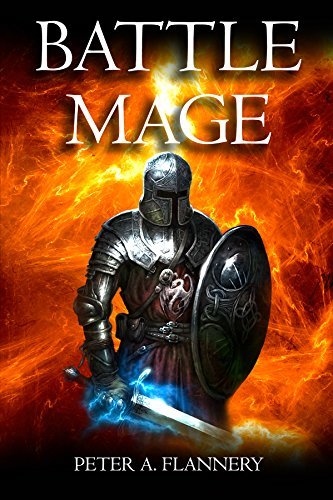
9. Battle Mage by Peter Flannery
This book is unfortunately overlooked because it’s an epic fantasy tale told in a single book. The entire world was constructed merely for a single novel, and you know what? It works. As I’m writing this article, I just found out that the author did in fact recently continue the series with a prequel and there is apparently also a sequel planned.
Battle Mage tells the same coming-of-age story you’ve seen in many other fantasy books, but it does so in a very fresh way, and unlike John Gwynne, Flannery doesn’t try to subvert the story but instead gives it an interesting edge, all while staying true to the core themes. What I really liked about Battle Mage (besides the action, the dragons and the knightly orders) was the level of passion in the writing. I could tell that the author really cared about his characters and the bonds of friendship and love feel very real in this one. It’s a dark tale, though, and it can at times be shockingly brutal.
I did have one MAJOR gripe here (one that I also experienced with Gwynne): the disappointing inability of the story to deal with the supernatural. It takes place in a world that is modelled very closely after medieval Europe, and the bad guys are literally demons from hell. And yet, there is no religion whatsoever in this setting. Going down that path, Flannery, like Gwynne, was forced to turn the demons into mere bad guys who have to be fought with physical weapons, leaving so many potentially fascinating spiritual themes on the table.
The complete absence of God in a world like this, otherwise so clearly medieval and Christian in its imagery, was incredibly bizarre. I just learned online that this absence simply stems from the author’s own atheism, which I think is actually very anticlimactic and kind of depressing.
Billions of people believe in God as THE foundational truth, the sole reason for all of existence. But for this author, such a view is apparently so impossible that he can’t even pretend that there’s some kind of divinity underlying a fantasy setting. He can believe in absolute evil that exists for no reason for the sake of a good yarn, but a creative will behind existence itself is too unthinkable?
If even the author is unwilling to suspend his disbelief for a moment for the sake of creating a world that truly feels medieval, how can he expect the reader to do the same?
Again, despite this one flaw, I thought the book was amazing and I wish the author great success in his future endeavours.

8. Harry Potter by J.K. Rowling
For a long time, I must admit I was a bit resistant to the Harry Potter series, but not for the reasons you might think. Strange as it may seem, to me it was hard to conceive of it as real fantasy. I always believed that fantasy was supposed to take us to completely fictional worlds, other realities if you will. Since Harry Potter basically takes place in present-day England, I just wasn’t that interested in it.
When I did at last give the books a chance, I must admit I really enjoyed them — especially the early ones. I do believe Harry Potter was at its best when it unabashedly basked in its childlike British charm, including the absurd humour that comes with that. My interest dipped a bit throughout books 4 to 6. I didn’t really enjoy the more complicated plot lines, the sprawling cast or the darker, more serious tone. Perhaps most of all, I simply got a bit tired of Hogwarts itself. I’m the sort of reader who enjoys epic quests. As a child and an adolescent, I hated school and I turned to fantasy stories in part to get away from its mundane dreariness. Granted, Hogwarts was a much more exciting school than any of the ones I ever attended, but by book 6 I felt like I had seen enough of it. Nevertheless, when taken on their own terms, those books were still very good. Then the last one came around and I was excited to see Harry outside of the confines of Hogwarts for a change. When at last he returned, the finale turned out to be absolutely spectacular.
I tried to stay ahead of the film releases with the books and made sure that I only watched each movie after I had read the book. I loved the whimsy of the wizarding world and I really enjoyed the very believable friendship between the main trio of Ron, Harry and Hermione. Some of Rowling’s storytelling really impressed me, particularly in the third book, where she actually managed to deal with time travel in a satisfying way. The way Rowling wove a tapestry of plotlines throughout the series and made sure that everything came together right before it got too convoluted was quite masterful, in my opinion. The final resolution was completely satisfying.
Still, despite all of its qualities, I can’t put Harry Potter higher on my list, simply because I never really connected with it on a more personal level. It always felt like something I enjoyed, but only in the same way I would enjoy a TV series: it never really spoke to my core in the way some other fantasy works do. Perhaps there is still a bit of residual resistance left, for some unknown reason, or perhaps I just really don’t like school.
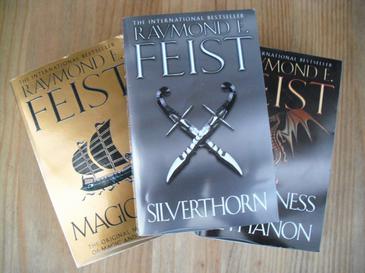
7. The Riftwar Trilogy by Raymond E. Feist
Feist’s massive saga, set in the two worlds of Midkemia and Kelewan, contains over thirty books and covers many fictional generations. However, it all started with a book called Magician, which stands alone quite well, but is greatly enhanced by its two successors Silverthorn and A Darkness at Sethanon. These three together form the original Riftwar trilogy, although each book tells its own story.
What can I say about the Riftwar trilogy? I’ve read it twice and enjoyed it immensely both times. These books aren’t remotely profound or even very emotional, but they are incredibly entertaining. They really are great adventure books first, and stories about medieval warfare, court politics and the mysteries of magic second. The character work tends to be on the light-hearted side, which can be refreshing in a genre full of brooding, tormented protagonists.
The saga gives us not one but two settings. Midkemia is a traditional fantasy world akin to a D&D campaign setting. This familiar realm remains the focus of the trilogy, which tells the story of how visitors from the world of Kelewan first crossed over into it. Some of the later books take place entirely in Kelewan, a more exotic setting with a culture that seems to fuse East-Asian and ancient Mesoamerican influences. While that’s very original, I vastly prefer Midkemia. You see, I like traditional fantasy of the kind that many people online like to call bland or generic. To me, there’s nothing bland or generic about dragons, castles, knights, wizards, dungeons etcetera. I’ll never get tired of that stuff. Kelewan, on the other hand, just doesn’t do much for me.
The Riftwar trilogy is incredibly fun. It’s a story told on a vast, epic scale, but it manages to do that without the cumbersome and exhausting tendencies such books can fall into. The focus always remains on a manageable group of characters, whose adventures are cool and fun to read about.
I tried my hand at some of the later books, notably Shadow of a Dark Queen, which takes place decades later, but I didn’t like that one anywhere near as much. Still, one day, I can definitely see myself returning to Midkemia and reading some of the other books. Not Kelewan, though. I just don’t care about that part (yes, I know everyone says the Daughter of the Empire books are the best in the series, and no, I still don’t care).
6. Drachenfels by Kim Newman (writing as Jack Yeovil)
One of my very first encounters with the fantasy genre came in the form of the HeroQuest and Battle Masters tabletop games, which I used to love as a ten year-old (in fact, I still do and I play them with my kids). A few years later, I learned that these games were connected to the wider world of Warhammer, and that led me to become an avid reader of White Dwarf magazine and avid but average painter of miniatures. The first Warhammer fiction book I ever owned was a collection of short stories, which I found immensely fascinating. It took me quite a few years before I finally started reading the full novels set in this world, though. So far, I’ve mostly stuck with the Gotrek and Felix series, but a few years ago, I went for the audiobook version of Drachenfels. It’s an old book, written in the early days of Games Workshop, back when the Warhammer lore wasn’t quite as well-established, and in some ways, it deviates quite a bit from what modern fans might expect. By that I mean there are some crazy characters and situations in this book which you wouldn’t see in a more recent Warhammer novel. All that only adds to its unique charm.
One might expect that a pulpy horror/adventure/comedy novel based on a popular hobby game would be a rather lazy, trashy and forgettable sort of read, but as you can see, I would currently place this book at number 6 of my all-time favourites list. Drachenfels was amazing.
The book has an incredibly effective and unique gothic atmosphere, wonderfully sharp and witty writing (both in dialogue and in prose). The main character, Geneviève Dieudonné, is a gorgeous vampiress who is actually… a very kind and noble-hearted person. At this point, you probably expect her to be a brooding heroine operating in the shadows, who is feared and mistrusted by the very people she protects. Nope. Everyone loves Geneviève. In fact, she’s something of a celebrity. In a strange way, it feels like this old book anticipated what would become grimdark clichés decades later and managed to subvert not the ancient tropes of traditional storytelling, but the very subversions that have become tiresome today. Drachenfels is also blessed with extremely confident, bold storytelling. The plot progresses at a perfect pace and manages to shock and awe the audience, all the while making us smile throughout. I don’t know how else to put it. It was fantastic. I know there are three more books in this series, but each of them stands alone, so I don’t mind reviewing this one separately. I’m certainly looking forward to the rest of this.

5. Gotrek and Felix by William King
The Gotrek and Felix books are probably the most famous ones set in the Warhammer fantasy world, known as the Old World, and they are some of the most entertaining books I have ever read.
Fans of the series may note that I’ve only mentioned William King as the author, even though many other writers continued the saga after King’s final entry. The reason for this is simple. Not only did William King come up with these characters, but I also think his books remain by far the best in the series. Gotrek and Felix without William King is a bit like Star Wars without George Lucas. It can still be good, but it will never be quite the same.
How can I describe the series? Well, far greater experts in the genre have likened it to old-school sword & sorcery novels such as those by Michael Moorcock and Fritz Leiber (I haven’t read those, so I can’t comment). It’s about an unlikely friendship between two very different characters. Gotrek Gurnisson is an indomitable Dwarf whose entire personality consists of only four basic elements: anger, cynicism, a kind of stoic pride and an endless thirst for beer and gold. However, make no mistake: Gotrek is far from a dumb brute, and he often proves to be remarkably clever, especially when it comes to practical matters. His counterpart Felix Jaeger is a poet-turned-swordsman who finds himself following Gotrek around, bound by the promise that he would record the Dwarf’s glorious death in an epic poem. You see, Gotrek is a Slayer, and in Dwarf culture, that means he must die in combat to atone for some mysterious sin in his past. What follows is a series of adventures in which the duo face ever more impossible odds, eventually fighting vampire lords and Balrog-like demons, and yet somehow they always come out on top (much to Gotrek’s chagrin). They never become rich or famous and no one ever credits them for their heroics. More likely, they will be chased out of town by angry villagers who end up blaming them for all the collateral damage caused by their confrontation with the evildoers.
There’s a thread of good-natured cynicism that runs throughout these stories, conveyed by a wry sense of humour of a kind only an author from the British isles (Scotland, in King’s case) could deliver. Meanwhile, the tales take us on a tour of the Old World, showing us all of its glory, its dark, gothic side as well as the rugged natural beauty, the majestic palaces and halls of its rulers and the disgusting vile lairs of its most loathsome denizens, such as the ratlike Skaven and the plague-ridden minions of Nurgle, god of disease.
Along the way, we meet a cast of characters who end up acting like regular guest stars in an old TV series: there’s the proud young noblewoman Ulrika Magdova, Gotrek’s demented friend Snorri Nosebiter, visionary inventor Malakai Makaisson and the brilliant wizard Max Schreiber.
The characters are just unforgettable in this series: every one of them is unique, in some ways greatly admirable and in others deeply flawed.
What I found most surprising about Gotrek and Felix was the amount of attention given to quiet moments of reflection. Often, Felix (who serves as the main viewpoint character) will find himself mulling over his life choices, contemplating questions of loyalty, friendship, love and death. I found him to be one of the most relatable protagonists I’ve ever encountered in fiction.
Usually, these little interludes are interrupted by insanely violent, over-the-top action sequences, and that’s where Gotrek gets to shine. I enjoy the contrast between these two sides of the books, and it’s an important reason why they’re so endearing.
I put the Gotrek and Felix series high up in my list because it’s one of the most fun, energising and truly escapist series of books I know. I only wish William King had been the one to bring the series to a close. Later books aren’t necessarily bad, but I’m a bit of a purist, and I always prefer to see the vision of the original author.
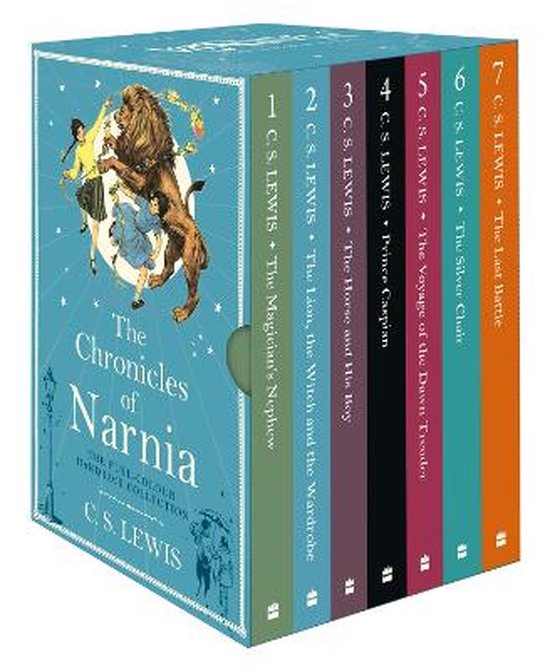
4. The Chronicles of Narnia by C.S. Lewis
The Narnia books are often overshadowed by Tolkien’s admittedly far greater work as a contemporary, and Harry Potter seems to have taken its place as the quintessential fantasy series for a younger audience, but they deserve something of a renaissance. Unfortunately, I doubt the upcoming Netflix adaptation will do much to help that along, but I suppose we’ll see. The Chronicles of Narnia is of course a portal story, which means that some elements of the real world make it into the fantasy. At first, I was a bit apprehensive about that (as I was with Harry Potter), but when I reminded myself that one of my favourite books of all time was The Neverending Story, I could accept the portal element and enjoy the stories.
Lewis is, of course, a genius. An old-school intellectual steeped in medieval literature, he nevertheless managed to write in a very succinct and approachable style that still reads very smoothly today. His stories espouse the Christian faith and convey clear moral messages, but they are never reduced to just that. Instead, each book in the chronicles tells an exciting tale characterised by its own unique atmosphere.
Similarly, the characters tend to be representative of specific virtues or vices. As a result, some might call them simplistic, but I would rather say it makes them clear, and none of them are ever reduced to one-note cardboard cut-outs. Lucy represents the virtuous believer in The Lion, the Witch and the Wardrobe, but she also struggles with envy and vanity in The Voyage of the Dawn Treader. Edmund starts out as a treacherous little brat who is redeemed by Aslan’s sacrifice, but the books also show the man he grows into: a truly wise king who has learned from his mistakes and arguably becomes the most ardent of all Narnia’s defenders.
While Narnia obviously doesn’t share the depth of Middle-earth as a setting, reading the full set of books reveals a surprisingly fleshed-out world with various nations, factions, historical periods and a plethora of fantastical denizens. For a children’s series, this is quite remarkable. I also love how Lewis had the guts to tell the story of an entire world from start to finish: we get to witness its creation in The Magician’s Nephew and the actual apocalypse in The Last Battle. Not what modern entertainment calls an apocalypse (some worldwide disaster, leaving only a small group of people trying to survive in a wild and dangerous landscape), no: a real apocalypse: the coming of the anti-Christ and the final destruction of the world. Pretty heavy stuff for a kids’ book, and I love that.
Lewis is often cast in the role of Christian apologist, and of course, he was brilliant at that, but he was also a great storyteller. Often, people overlook the fact that he didn’t simply write the Narnia books as a vehicle for Christian themes, but created them from genuine artistic inspiration drawn from images, moods and the desire to discover breathtaking places like Cair Paravel, meet strange creatures such as Puddleglum and Mister Tumnus, and witness fantastic events like a star descending from heaven and turning into a beautiful maiden, or a great battle between the armies of good and the armies of evil.
If you’ve only seen the movies and enjoyed them, I very highly recommend reading the books. In my opinion, the most exciting parts haven’t even been adapted yet.
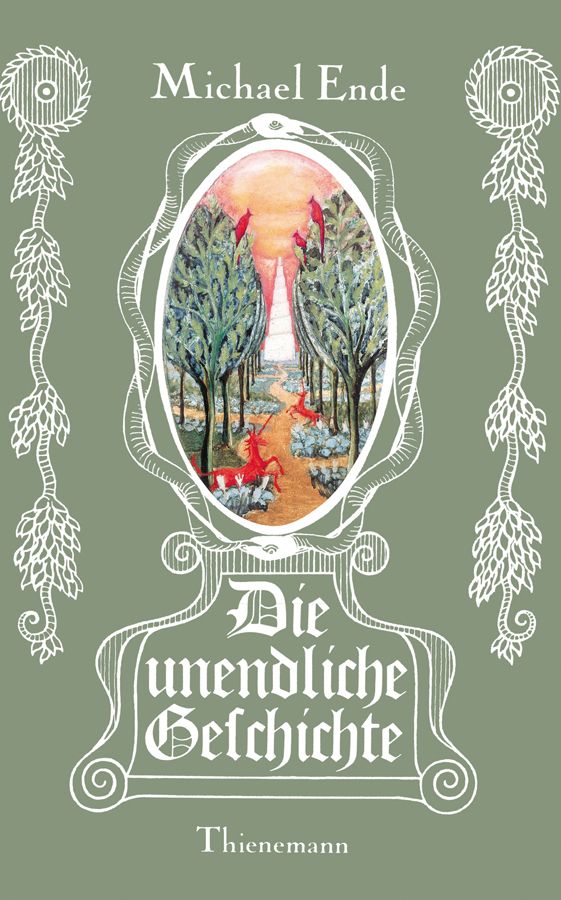
3. The Neverending Story by Michael Ende
The Neverending Story was an absolutely vital cornerstone of my formation as a child. In fact, my love of fantasy probably began with this book. I first encountered it through the movie, which I used to watch over and over again on Betamax tape, but then one fateful trip to the library I discovered the book. I ended up reading it several times, both in my native Dutch and in the original German (the latter as an adult, obviously).
The Neverending Story is in my opinion one of the greatest children’s books ever written. It’s full of rich symbolism and layers of meaning, but it’s also unbelievably imaginative and emotionally resonant on a deep, personal level.
I’m going to spoil the plot now, but that’s the only way to express what makes The Neverending Story so special.
The book’s protagonist is a boy named Bastian. He is something of a loner, a dreamer, a kid with his head stuck in the clouds, who simultaneously suffers from an inferiority complex because he remains unaware of any noteworthy qualities within himself besides his limitless imagination, which the world constantly tells him is nothing but a useless distraction. On top of that, he is a half-orphan, and his relationship with his father has turned cold and distant, both locked up in their grief, one fleeing in his work, the other in his imagination, neither connecting to the other.
One rainy day, Bastian finds himself hiding from bullies in a dusty old bookshop, where he finds a mysterious old tome called The Neverending Story. Obsessed with stories, Bastian absconds with the book and hides in the school attic, where he starts reading about the magical world of Phantasia.
Within the pages of The Neverending Story, Bastian learns that the Childlike Empress, the beneficent ruler of Phantasia, is dying of a mysterious illness, all while parts of the world are disappearing as a result of the encroaching “Nothing”.
A young hero is chosen to find a cure for the Empress and end the threat of the Nothing. His name is Atreyu. Together with his horse Artax and later on the wise, optimistic Luck Dragon Falcor, he goes on many adventures. Eventually, he fails in his mission and only then is it revealed that Bastian himself, the reader holding the book, can save Phantasia by giving a new name to the Childlike Empress.
To be clear, Phantasia is not an allegory for the imagination, just as Aslan is not an allegory for Christ. Aslan is Christ, simply taking on the form of a lion within Narnia. Similarly, Phantasia is fantasy, which is why it’s a world without borders. As creatures of fantasy, the denizens of Phantasia don’t have any imagination of their own, and without the imagination of a human child from outside the pages of the Neverending Story, their world falls victim to the Nothing, which is nihilism and despair in the human mind, gradually eating away their world.
And so Bastian enters the book and becomes Phantasia’s saviour. Within Phantasia, Bastian’s imagination proves to be the most valuable and precious gift of all, and he is able to save the world from destruction. This is the part of the story most people know from the 1984 movie, which I still consider to be a very good adaptation (even though the author apparently hated it).
However, Wolfgang Peterson’s film only deals with the first half of the book. Things take a surprising and rather bold turn in the second half.
As Bastian becomes the hero of Phantasia and explores the world, he loses his innocence and becomes arrogant and domineering, which eventually leads to terrible consequences. Eventually, he has to lose everything and start over. He learns what it means to be humble again, to give and to receive love innocently, and ends up realising that he needs to reconnect with his estranged father.
When he comes back to the real world, he heals his relationship with his dad, and while Bastian hasn’t aged a day in the real world, he has now grown into a mature individual. He understands that fantasy has great power, beauty and value, but we aren’t meant to lose ourselves in it. We are meant to take those wonderful qualities back with us and use them to enrich the world in which we live, at times even to heal it.
I tend not to judge stories by the depth of their themes or how insightful I deem their commentary on the real world. I primarily enjoy them for their own sake, and this is certainly true for The Neverending Story. I find the world of Phantasia utterly wonderful, and the characters and creatures within it speak to me. However, in this case, there is something endlessly fascinating about the way Michael Ende expresses his ideas through the story. There is symbolism, but I certainly don’t think everything is symbolical. Some characters clearly embody certain abstract concepts, others are just whimsical inventions. There is something very intuitive about the writing, which reminds me of Tolkien. Although the book can simply be enjoyed as a beautiful story, it’s built on deep philosophical musings. There are points where the book in Bastian’s hands breaks through into his reality through metafictional story elements, such as the chapter where we visit the scribe writing down The Neverending Story even as it unfolds; but then we realise that we, as readers, are also holding a book called The Neverending Story in our hands. Is the author trying to convince us that his book might break through into our own reality? Or is he merely having a bit of fun? I honestly don’t know, but it fascinates me.
The book is printed in two colours: the parts set in Bastian’s reality are printed in red letters. The story that takes place in Phantasia is printed in blue letters. There are exactly 26 chapters, each one named after a letter of the alphabet (appearing in order, of course), and the first word of each chapter starts with that particular letter (which must have been a pain for the translators!). In addition, the chapters all open with a page-filling illustration showing the corresponding letter surrounded by little drawings that depict the events that will follow, and all of it is printed in red and blue. It’s incredibly clever, and it draws you into the book’s fantastic reality in a completely unique way. If ever there was a book that needed to be read in printed form and not as an e-book, it’s this one.

2. Dragonlance by Margaret Weis and Tracy Hickman
How do I explain what Dragonlance means to me? I can start by clarifying that my love for this series is not based on nostalgia. I first got to know Weis & Hickman as a teenager back in the nineties, with the Dutch translations of their Death Gate series. Back then, I had a lot of trouble focusing on reading, even though books appealed to me, especially fantasy novels. I only read one book in the Death Gate series, and it was the third one, which I took out of the library because I loved the cover illustration. I mean, come on, it had a titanic dragon emerging out of a lake of lava in vast cavern and the title was FIRE SEA. How could I not skip the first two and go straight for that one? Because of my lacking foreknowledge, I don’t think I really understood much of the story but to be honest, I don’t remember much of it either.
In any case, I knew Weis & Hickman but I didn’t know about Dragonlance until much later. This is perhaps a bit unusual, because Dragonlance is what made this writing duo so famous and Death Gate is usually a series their fans discover later on. In my case, it was the other way around.
Having been a tabletop RPG enjoyer for many years, I was always a bit curious about Dragonlance, but I never got around to actually reading it until a few years ago. Tired of modern books, I was in the mood for some classic D&D-style fantasy, and Dragonlance looked like it fit the bill. When I started Dragons of Autumn Twilight, I got what I expected, but I got a whole lot more than that as well.
To be fair, I didn’t immediately fall in love with the first book. The warm, cozy vibes and the full-blooded embrace of old-school D&D tropes charmed me, but I wasn’t very impressed with the prose. I felt that the book introduced too many characters at once, the stakes weren’t entirely clear and the omniscient narration felt somehow out of place. But I loved the mood that was set in the opening scenes: a beautiful autumn day in the village of Solace, where a group of adventurers was about to meet in the Inn of the Last Home, a picturesque building nestled in the tall branches of an enormous vallenwood tree. I could smell the coloured leaves, the firewood and the spiced potatoes on the table as the band of heroes was introduced. There was a gruff but lovable dwarf, a noble knight, a brooding half-elf ranger, a mysterious young woman carrying a blue crystal staff, a childlike, roguish creature called a kender, and of course, the Majere twins: one a jovial warrior, the other a cynical, power-hungry mage. From the very beginning, the tone is set and it felt like coming home in a world where I had never been before.
As I continued, I slowly began to fall in love with these characters and the world they inhabited. Something about it just clicked with me. Dragon of Autumn Twilight had a wonderful mix of the familiar and the new. It wore its Tolkien influences on its sleeves, but it was also very much a setting of its own: a high fantasy realm in a state I would call post-post-apocalyptic. It was set 3 centuries after an event of divine wrath known as the Cataclysm had destroyed half the world. The resulting land was one where old maps and roads could no longer be trusted, and entire peoples had grown isolated, separated from each other by a changed landscape and an ever-encroaching wilderness. It was a perfect setting for adventuring, but this was not a small-scaled sword & sorcery novel. Rather, it was the first act in a trilogy about the war between the forces of good and the forces of evil, much like The Lord of the Rings, all while bringing something fresh to the table as well.
When I first started the novel, I took in the characters as archetypes: gruff dwarf, noble knight, etcetera. But as I continued, I began to see that each member of the party was more than that — not a subversion or a deconstruction of an archetype, but a classical archetype that was also a believable person. Flint Fireforge was not just a gruff dwarf, but also a caring father figure who was coming to terms with his old age even as he worked hard to pull his weight in the group. Tanis was not just the wise leader, but a flawed man, torn between the world of men and the world of the elves. He also struggled with self-doubt and bouts of deep pessimism. Even the cheerful, muscular warrior Caramon turned out to have hidden depths to his personality, which made him quite endearing. Of course, most people’s favourite was Raistlin, Caramon’s frail twin, a mage with golden skin and pupils shaped like hourglasses, cursed to see the inevitable demise of all youth and beauty around him, his body wrecked by a chronic illness caused by his incessant hunger for magic and the power it granted him. He was a man on a dark path, and yet he was allied with the heroes of good through his uneasy, co-dependant relationship with his brother.
The more I read about these characters, the more I began to appreciate them. At first I enjoyed the book the way one might enjoy a cheesy action movie from the same era (the 1980s), with a sort of detached amusement, but with each chapter, I began to get more drawn in, and I quickly moved on to the follow-up, Dragons of Winter Night. That was when I became a true Dragonlance fan.
The second book in the trilogy blew me away. Reading it felt like going to a theatre to see a truly epic movie. It had action, romance, war, betrayal and hope. It had dark forests, snowy mountains, enormous palaces, mysterious towers and forgotten tombs. It had dragons, heroes, villains, gods, wizards, death knights and griffons. There were tragedies, triumphs and laughter. And the pacing was pitch-perfect. Dragonlance managed to capture something for me that very few books in the genre had: the true heart of fantasy, or at least, what I love about fantasy.
The trilogy reached a fantastic conclusion in Dragons of Spring Dawning, and I thought: “I want more of this”. Suffice it to say that I am now on my 15th book in this world and I still love it. I’ve never been disappointed by Margaret Weis & Tracy Hickman, and the world of Krynn now feels like a real place to me. Eventually, I will likely try the books that other authors have written for this setting as well.
Yes, I can point to many flaws in the Dragonlance novels, from decidedly objective ones (far too many typos) to personal peeves (I don’t always like how the Knights of Solamnia are portrayed, for example), and I wouldn’t even hesitate to say that these books probably have more flaws than any of the ones I’ve mentioned on this list before. And yet, I rate these higher. Why? Because the Dragonlance novels speak straight to my heart, in a way that managed to pierce right through my four decades of life experience and the unfortunate grime of cynicism and jadedness accumulated over that time. Dragonlance somehow disarms me, and it simply makes me happy. For me, these novels provide an experience of pure story, in a way only one other series of books can surpass, and that is…

1. The Middle-earth legendarium by J.R.R. Tolkien
It’s almost impossible to write anything about The Hobbit and The Lord of the Rings anymore that hasn’t been written yet. These books are obviously the pinnacle of fantasy literature and they will never be dethroned, in the same way Shakespeare and Homer can never be surpassed.
A book like The Lord of the Rings could only be written by one man, at one point in time, and we have passed that moment. The depth of Tolkien’s knowledge of linguistics, history and mythology cannot be reproduced in our age. The attention to detail he gave to every little bit of background, every detail of the geography, the nomenclature, the heraldry, the genealogy of his world — who could match that?
This man didn’t just invent his own languages. He gave each of them a history of linguistic evolution, from the phonetic to the semantic level. He wrote a 1000-page epic by hand over the course of 14 years, and then said it only scratched the surface of the mythology he had invented — and he was right.
I have a copy of The Silmarillion with a blurb that says: How did one man manage to become the creative equivalent of a people? Good question. I think it was only possible because this man was unbelievably gifted.
It’s easy to focus on how impressive the Middle-earth saga is. Even The Hobbit, the childlike opening chapter, already shows signs of a linguistic and stylistic sophistication you would rarely find in a modern novel, and certainly never in one for children. However, what makes Tolkien’s work so great is not the fact that it’s so insanely impressive, in my opinion.
It’s that it’s so insanely beautiful. And true. And good.
If you haven’t read it yet, please do. Even if you’ve already seen the movies. I love the movies (they’re my favourite movies of all time), but there is so much more to the books, as Peter Jackson would happily acknowledge himself.
Perhaps the best person to describe The Lord of the Rings would be Tolkien’s close friend C.S. Lewis, who wrote: “Here are beauties which pierce like swords or burn like cold iron.”






![Disney ruined Beauty and the Beast [review]](https://www.geeksfromouterspace.com/wp-content/uploads/2017/12/bnb_featured-38x38.jpg)
![Frozen is as ice-cold as its title [review]](https://www.geeksfromouterspace.com/wp-content/uploads/2017/07/frozen-poster-38x38.jpg)


![The prequels were better than The Force Awakens [review]](https://www.geeksfromouterspace.com/wp-content/uploads/2015/05/star_wars_force_awakens_movie_poster-38x38.jpg)